
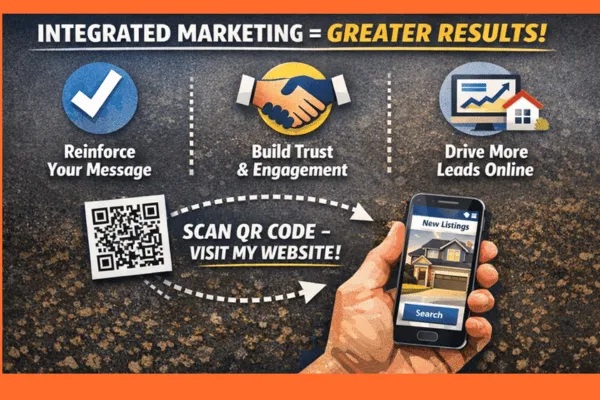
Building a Bridge from Offline to Online for Organic Growth
Stop Choosing Sides: Why Digital and Direct Mail Work Better Together
Modern marketing has trained us to believe we must choose between digital speed and physical impact. That framing is misleading—and expensive. People don’t experience brands in silos; they scroll, click, research, and then check their mailbox. When digital and direct mail are treated as competing strategies, the customer journey becomes fragmented and forgettable. This article explores how integrating physical mail into your digital flow creates reinforcement, improves recall, and turns isolated touchpoints into a cohesive, measurable experience that drives deeper engagement.

1. The False Choice Between Digital and Direct Mail
It’s a story as old as digital marketing itself. You’re asked to choose a side. Do you want a modern, scalable, data-driven digital strategy, or are you clinging to the nostalgic, tangible world of direct mail? This framing is a trap.
The most persistent myth in marketing isn’t about which channel is better. It’s the idea that digital and direct mail are separate strategies competing for the same budget and attention.
We treat them like rival departments, when they should be complementary players on the same team. The real opportunity isn’t in choosing one over the other. It’s in rejecting the choice entirely. Direct mail shouldn’t compete with your digital efforts. Its highest purpose is to complete them. Think about how people actually live.
They scroll on their phones, then check their physical mailbox. They research a product online, and a few days later a catalog arrives. Our channels are isolated, but our audience’s experience is not. When we force these channels to operate in silos, we create a fragmented, confusing journey for the customer.
The goal is a unified conversation, not two separate monologues. This integrated approach is what turns a simple touchpoint into a memorable brand experience.
2. Why Isolated Campaigns Fall Short
Treating digital and mail as separate campaigns does more than waste budget. It actively sabotages your results. When channels operate in isolation, you face three predictable failures. First, you miss every chance for reinforcement. A digital ad is fleeting. A physical piece arriving days later creates a powerful echo of that initial touch. Without this connection, each message is just a shout into the void. Second, you guarantee inconsistent messaging. Your digital team uses one value proposition, while direct mail uses last quarter's assets. The customer doesn't see one company, they see two. This erodes trust and confuses your brand story. Finally, you cannot build a continuous journey. An isolated campaign is a dead-end street with no memory of what came before or plan for what comes next. The result is a fragmented experience for your customer and fragmented data for you. You can't see how the mailer influenced the website visit, or how an email made the final offer more effective. The most frustrating result isn't low response rates. It's getting decent results while having no real idea what actually worked. You're left guessing. To move forward, we must stop launching isolated campaigns and start connecting moments. This leads directly to the most straightforward way to begin, using mail not as an opener, but as a deliberate follow-up.
3. The Power of Sequencing: Direct mail as a Digital Follow-Up
The Power of Sequencing: Mail as a Digital Follow-Up*We've seen the cost of keeping channels separate. The first step to fixing it is using mail as a deliberate next step. Digital interactions are often quick and forgettable. A cart abandonment or a webinar sign-up is a high-intent signal that can easily fade. A physical mailer arriving days later changes that. It turns a digital blip into a tangible conversation. This isn't just another ad. It's a physical response to a person's action. A postcard showing an abandoned cart item feels personal. It shows you noticed. Mailing a webinar agenda after sign-up deepens commitment before the event starts. The sequence is strategic. The digital step identifies interest and captures an address. The mail piece capitalizes by making that interest physical. This creates a continuum. Mail completes the digital interaction by giving it weight and permanence. The goal is deeper engagement, not an immediate sale. You're building a more memorable experience by acknowledging the customer's journey. Once that mail piece lands, the opportunity flips. You now have a physical object designed to send them back online. How you design for that action is what comes next.
4. Designing Digital Mail to Drive Digital Action
Let's flip the concept entirely. What if the mail piece itself is the starting pistol for an online journey? Your creative strategy needs to shift. Every element should be engineered for a single purpose, to make someone go online. This isn't about a small-print URL. It's about making digital action the obvious next step. The tools are straightforward, but their application is key. A QR code shouldn't just link to your homepage. It should lead to a personalized landing page that acknowledges the mailer they're holding. The offer itself is the critical bridge. It must justify the minor effort of moving from physical to digital. Think limited-time access codes, personalized offers, or an invitation to claim a download online. When you design mail this way, you're not sending a brochure. You're delivering a tangible key that unlocks a specific digital experience. This turns a passive recipient into an active participant. The mechanics are simpler than most assume. It comes down to a practical framework for planning, which is exactly what we'll cover next.
5. Practical Frameworks for Connecting Channels
You get the why and the how. The real question is how to build a repeatable system, not just a one-off tactic. It begins with a planning shift. Stop debating email versus mail. Start by asking what the customer journey looks like for your goal, and where physical and digital touches fit best. For that to work, your data must be connected. Your CRM or marketing platform needs to be the single source of truth. A digital action should trigger a mail stream, and a mail response should update the contact's profile for digital retargeting. This is basic plumbing, but it's essential. Timing is your most powerful lever. A reliable framework is the digital-physical-digital loop. First, a digital trigger, like a cart abandonment or a high-value content download. Then, a targeted mail piece arrives a few days later, referencing that action. Finally, the mail drives them back online with a clear call-to-action to complete the cycle. You must measure the entire loop, not just individual links. A mail piece might have a low direct response rate, but its real value often shows up as a lift in branded search traffic, localized website visits, or higher conversion rates on your digital offer. Your true KPI is the performance of the combined journey. This doesn't require overhauling everything at once. Start with a single, focused pilot.
6. Getting Started with Your Integrated Strategy
The case for integration is clear. The real challenge is figuring out where to start without overhauling your entire operation overnight. Start small and focused. Choose one specific customer journey where a disconnect is obvious. A common, effective pilot is targeting online cart abandoners with a follow-up postcard. This creates a contained experiment with a clear digital trigger and a measurable loop. Begin with internal alignment. Get your digital and direct mail teams, or your different agencies, in the same room for a single campaign kickoff. Focus the discussion on the customer's seamless experience, not channel budgets. Anchor that pilot on a single, unified objective like driving a website visit, not individual channel metrics. Measure the combined lift of the integrated sequence versus the digital touch alone. You’ll likely find the whole is greater than the sum of its parts. This initial success proves the concept. More importantly, it builds the cross-channel muscle memory and shared vocabulary your team needs to scale. The goal isn’t to run everything through both channels. It’s to strategically use mail to complete your digital story, making each channel more effective because the other exists. Start with one journey, align one team, and track one combined result. The rest will follow.
